News
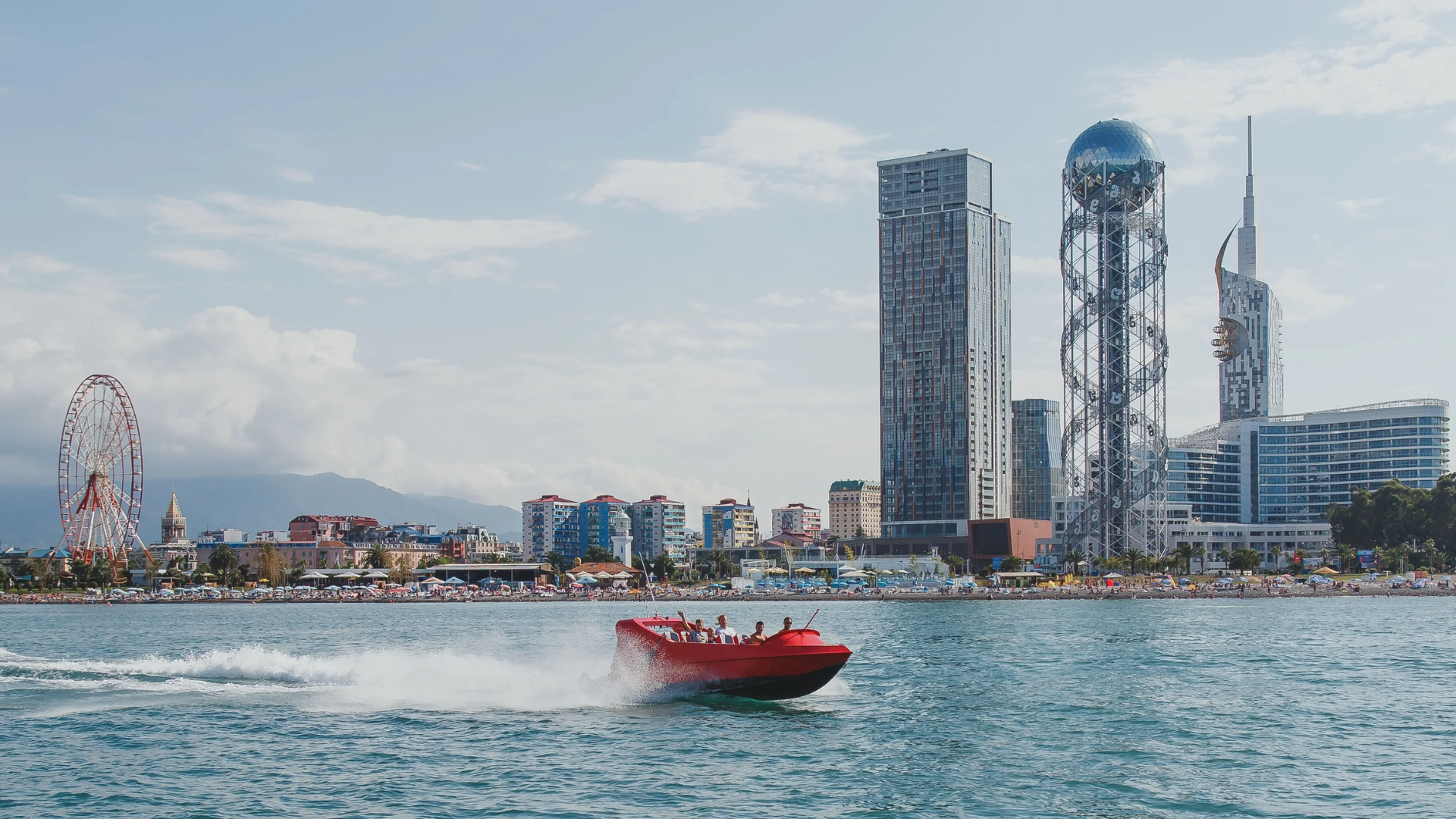
Batumi International Maritime Forum – Key Messages
2026-09-09
About the Forum
An International Maritime Forum was held in Batumi on
September 7–8, aimed at strengthening Georgia’s status as a maritime nation,
showcasing the potential of the "Middle Corridor," and developing
regional transport connections. The forum serves as a key regional platform for
discussing maritime and logistics issues, bringing together over 300 delegates
from dozens of countries this year. The Georgia International Maritime Forum
(GIMF) was held with the support of the Government of Georgia and organized by the
Maritime Transport Agency.
From Seas to Corridors
"The entire system within the Middle Corridor must be
unified and function as a single instrument," stated Zhanibek Taizhanov,
Deputy Minister of Transport of Kazakhstan, during his address at the forum. He
noted that railway projects covering a distance of 5,000 kilometers are
currently being completed in Kazakhstan, and plans are in place to modernize
road networks. Additionally, the Aktau and Kuryk ports are being developed, and
seabed dredging operations are underway. Plans are also in place to expand the
Kazakh fleet by eight vessels by 2028. Based on specific agreements with the
People's Republic of China, the formation of up to 3,000 trains annually is
anticipated, and Kazakhstan is prepared to facilitate their transit.
Meeting with the Head of Abu Dhabi Ports Group
On the sidelines of the Georgia Maritime Forum, Mariam Kvrivishvili, Minister of Economy and Sustainable Development, met with Abdulaziz Zayed Al Shamsi, Regional CEO of Abu Dhabi Ports Group. The parties discussed the progress of the Group's investment projects in Georgia, including the next stages of the Tbilisi Dry Port development and its role in the development of the Middle Corridor. The meeting also addressed the progress of the Anaklia Deep Sea Port construction and its development based on the so-called "landlord" model.
Ministry of Economy and Sustainable Development of
Georgia
Minister Mariam Kvrivishvili: "According to
preliminary data, 13.7 million tons of cargo were handled at Georgia's seaports
and terminals during the first eight months of 2026—a 24% increase compared to
the same period last year. This marks a record high for the last decade. Furthermore,
growth was observed across all major cargo categories. A record figure was also
recorded for Georgian Railways, where freight turnover increased by 11%.
The criteria defining competitiveness are also shifting.
Today, advantage is no longer determined solely by geographical distance. A
route's ability to ensure the rapid, safe, and predictable movement of cargo
from the point of origin to the final destination is becoming increasingly
critical. It is against this backdrop that the strategic importance of—and
international interest in—the Middle Corridor is growing. For Georgia, this
represents both an opportunity and a responsibility... The Government of Georgia
will invest $700 million in the Anaklia Deep-Sea Port, and with private sector
investment, the total figure will reach $1.1 billion.
Our" Human capital is one of the maritime sector's key
resources. Today, we have over 21,000 certified Georgian seafarers, whereas in
2012, that number stood at approximately 8,000. Their contribution to Georgia's
economy amounts to roughly 1 billion GEL. Georgian seafarers are currently
recognized by 75 of the world's leading maritime flag states, including those
of the European Union.
Deputy Minister Tamar Ioseliani: "The Middle
Corridor is multimodal by nature. Our objective is to ensure this route
operates as seamlessly as possible and to integrate ports and maritime shipping
with railways, highways, border crossing points, and digital systems.
We are investing in the entire transport chain: railways,
highways, existing ports, and the Anaklia deep-sea port. However, the true
value of these investments will be demonstrated by how effectively these
projects connect with one another and with the infrastructure of the broader
region."
International Hydrographic Organization (IHO)
Secretary-General, Admiral Luigi Sinapi: "Imagine if the world's maritime corridors were to come to a halt; we would no longer have supplies of goods, fuel, and many other essentials for our daily lives. That is precisely why maritime corridors are so vital, and why this event holds such great significance. In this region specifically, Georgia acts as a facilitator and a connecting nation, linking people and states, as well as international standards and organizations, with the region and its population. This is exactly why Georgia’s role is particularly important here in the Black Sea region."
Sources:
bp.ge / businessinsider.ge / share.google
bm.ge / bp.ge / bp.ge / bm.ge / bp.ge