News
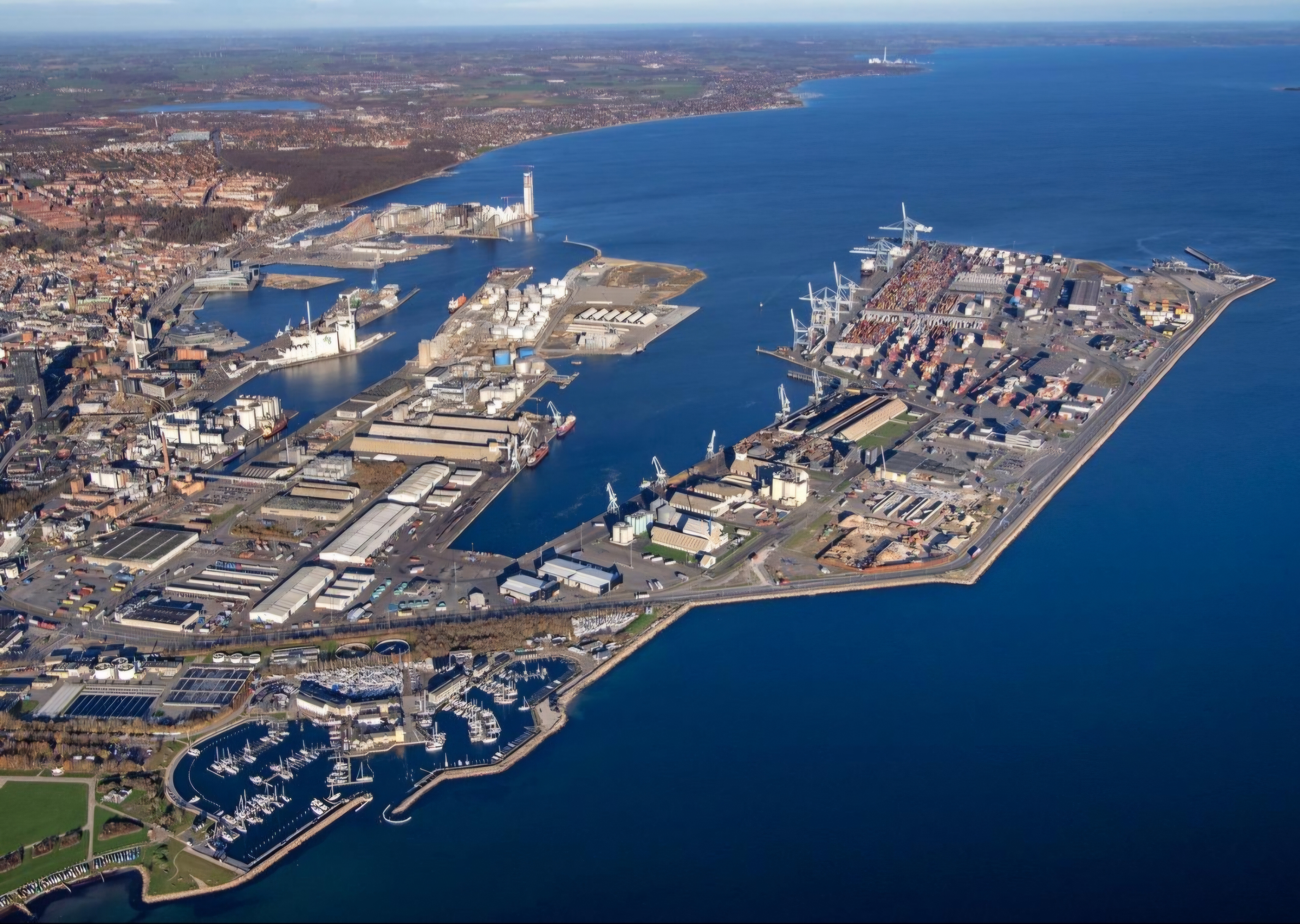
Denmark — Integrated Logistics State
2026-07-05
Denmark’s strength is not just in one port or one company — it is a port + global company + infrastructure + state policy in one system.
1) Port as the center of the system
● The Port of Aarhus is Denmark’s largest commercial port and Scandinavia’s main container hub. The port allows for rapid transhipment from ship to rail/trailer; the port is not just a “landing point” — it is a distribution hub and Denmark’s “logistics engine.” The port handles approximately 8–10 million tons of cargo per year.
● Port of Copenhagen: Located in the capital. Works with both the Danish and Swedish (Malmo) single logistics zones. Strong directions: cruise tourism, containers, energy cargo. It is a more “urban” and multifunctional port. The container terminal, which opened in 2001, is located on an area of 175,000 square meters and is equipped with several berths that can handle ships of the “Panamax” and “Post-Panamax” class. The terminal’s annual throughput capacity exceeds 194,000 TEU; it is also worth noting the high growth rate — in the first five months of 2025, the figure amounted to 49,100 TEU. The facility is equipped with modern gantry cranes and operates without fossil fuels. In order to increase throughput, a new container terminal is being built with an area of 133,000 square meters. The terminal is operated by the company Copenhagen Malmö Port and receives cargo from major European hubs such as Hamburg and Rotterdam.
2) Global maritime power
A.P. Moller – Maersk is the second pillar of the
system. What Maersk does:
● Owns one of the largest container fleets in the world
● Operates global routes (Asia-Europe-America)
● Moves to an “end-to-end” model (cargo management from the
shipper’s door → to
the recipient’s door):
○
Ship
○
Port
○
Warehouse
○
Delivery to the customer
● The main idea: One company controls the entire supply chain.
3) Land and European connectivity
Denmark is not an isolated island — it is integrated into
the European network:
● German railways and autobahns
● Scandinavian bridges and tunnels (e.g. Øresund)
● Fast connection to Central Europe
● The main result: cargo is moved from the port to Europe in hours, not days.
4) Additional logistical strength
DSV - one of the world's largest freight forwarders,
managing air and sea freight, land transportation and warehousing.
■ Maersk + DSV = two global logistics giants in one country.
Why does this system work so well?
1) Geography: Denmark is located at the Europe-Baltic
Sea junction.
2) Concentration: It is a small country → everything is in one
ecosystem.
3) State policy: Infrastructure is built to
strengthen exports.
4) Private giants: Maersk and DSV create a global
network.
5) Integration: Port + railway + roads + companies =
one system.
6) Securities: The main stock exchange is Nasdaq
Copenhagen (Denmark), where Maersk and DSV shares are listed.
Simple scheme: Asia →
Maersk ships → Port of
Aarhus → DSV/railway → Europe.
If we evaluate on a global scale, by international network, revenues and influence, then two of the three most powerful logistics companies in the EU are Danish (Maersk and DSV - after the German DHL Group), which shows that Denmark, despite its small population, occupies a particularly strong position in global logistics.
P.S. Logistics in Denmark is not an industry - it is a national economic model. That is why Denmark is a small country, but a top leader in global logistics.
Zurab Maghradze, DBA
Sources:
● portofaarhus.dk ● portofaarhus.dk
● portofaarhus.dk ● unisco.com
● wonderfulcopenhagen.com