News
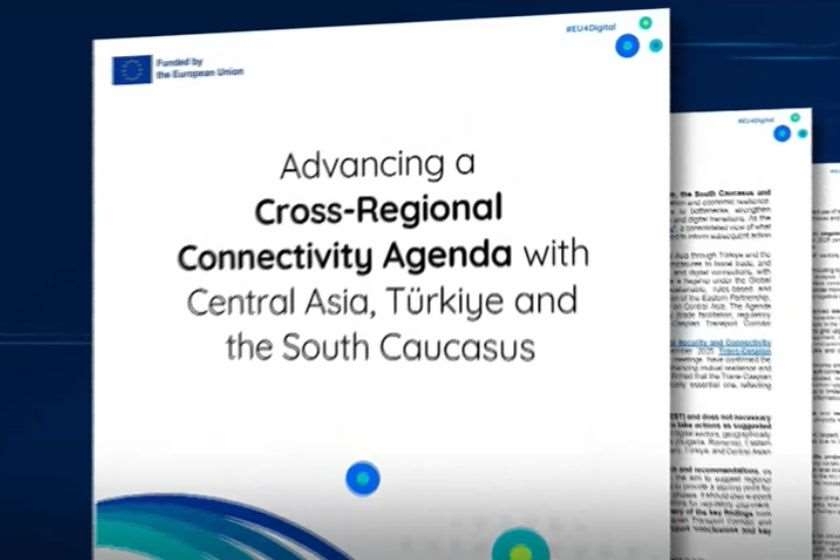
European Union regional approaches in the transport sector
2026-02-10
The European Union’s strategic approach to
the Black Sea region recognizes the Black Sea and its neighboring countries as
key gateways connecting Europe with Turkey, the South Caucasus, Central Asia
and other regions. Improving transport connectivity for the European Union with
Turkey, the Eastern Partnership region, including the South Caucasus and
Central Asia, can ensure faster and more reliable imports of raw materials and
goods, as well as open up new export markets across Eurasia, leading to the development
of mutually beneficial trade. In this context, against the backdrop of the
decreasing reliability of the “Northern Corridor” and the slowing development
of the “Southern Route”, the “Trans-Caspian Transport Corridor” (TCTC) appears
as the most promising way to create an environmentally friendly, diversified
and geopolitically sustainable multimodal transport link between Europe and
Asia. In addition, the significant increase in cargo flows and the agreement
signed between Armenia and Azerbaijan on August 8 further strengthen the
position of the Trans-Caspian Transport Corridor as the most viable route for
ensuring environmentally friendly, diversified and resilient regional
connectivity.
In recent years, there has been a sharp
increase in the volume of investments in infrastructure along the Trans-Caspian
Transport Corridor, although significant problems and bottlenecks remain in
terms of both hard infrastructure and soft connectivity. These problems range
from relatively quick solutions that allow for increasing the carrying capacity
of overloaded nodes (e.g., increasing the efficiency of border crossing points)
to long-term investments in the development of new infrastructure (e.g., building
a new port).
Typically, when discussing the
Trans-Caspian Transport Corridor, Kazakhstan, Azerbaijan, Georgia and Turkey
are mentioned as key players along the route from China to Europe. However,
countries such as Armenia, Uzbekistan, Kyrgyzstan, Moldova and Ukraine also
play an important role:
• Armenia: In addition to a significant
expansion of the TEN-T network, the “Trans-Caspian Transport Corridor” could
gain operational benefits from the development of resilience-enhancing branches
in the South Caucasus (re-establishing connections between Armenia, Azerbaijan
and Turkey), which may open up due to recent geopolitical shifts in the South
Caucasus. This could help diversify trade routes, potentially relieving
congested areas. This could also significantly improve transport connectivity
between Armenia and the European Union.
• The development of “feeder lines” and
multimodal connections from Central Asian countries not conveniently located
along the main corridor, such as Uzbekistan, Kyrgyzstan, and Tajikistan, would
further enhance the corridor’s ability to transport the region’s critical raw
materials (CRMs) and other export goods to and from the European market. These
connecting lines would facilitate the integration of producers operating in the
region into trans-Caspian supply chains, expand the options for suppliers to the
European Union, and stimulate inclusive regional development.
• The cases of Ukraine and Moldova
represent separate but complementary dimensions of the regional connectivity
scheme. Their strategic orientation is determined, first of all, by integration
with the European Union, but they interact with the Trans-Caspian Transport
Corridor so far through the Western Link via the Black Sea ports and the
Danube, connecting to the European Union TEN-T network.
The following priorities have been
identified, which complement the projects already implemented in the region
within the framework of the Global Gateway strategy:
1. Invest in effective infrastructure
projects selected by the European Union within the framework of the expansion
of the Ten-T network and development partners, such as the European Bank for
Reconstruction and Development (EBRD), the World Bank, with the aim of
stimulating open, rules-based governance along the corridor and making
decisions that protect the long-term interests of the countries and their
citizens along the Trans-Caspian Transport Corridor, as well as in the European
Union.
2. Improve connectivity in the South
Caucasus and identify missing nodes in the existing extension of the TEN-T
network, which is related to recent geopolitical events, which could integrate
Armenia into the “Trans-Caspian Transport Corridor” to increase its resilience.
3. Encourage the development of soft
connectivity and increase compatibility with common standards along the
“Trans-Caspian Transport Corridor”.
4. Encourage the development of
partnerships with the private sector in the implementation of projects along
the corridor, covering design, construction, logistics and digital systems.
This will enable the introduction of standards and technologies compatible with
international norms, increase the role of manufacturing and improve the
exchange of advanced regional experience with the help of local partners.
5. Strengthen the integration of Moldova and Ukraine into European networks by complementing the existing instruments for investments in hard infrastructure, as well as the existing levers in the field of soft connectivity (e.g. digital solutions for cross-border procedures, digital transport documents, etc.).
Professional Railwaymen's Club