News
Gatewayology — The Beginning of a New Concept
2026-09-07
The word “gatewayology” is so new and non-standard that the reader may not
understand what it means exactly at first glance. In Georgian terminological
resources, “gateway” is a separate established word, but “gatewayology” does not seem to be a
widely established term.
“Gateway” itself in Georgian directly means an
entrance/exit, including the main entrance to a city, fortress, or other space.
Therefore, a term built on this word naturally creates the association
“knowledge of entrances/gateways”.
Gatewayology - Monthly Analysis of Countries, Corridors and Trade
Nodes
Gatewayology - Analysis of Strategic Gateways, Corridors and Markets
The term TRACECA.GE synchronously complements the concept -
countries, ports, borders, transport corridors and trade nodes are actually a
network of "gateways". It simultaneously contains geography +
logistics + geoeconomics + strategy. And most importantly, this is a name
around which its own intellectual brand may be created over time.
Georgians have a great word in their own language - gateway.
"Gateway" is not just an architectural object, but
a part of Georgian historical thinking.
Zekari, Kldekar, Tsilkar, Khidikar, Small Kari, Maidani Kari, Soghdebil Kari, Rabadi Kari,
Hisaki Kari, Tbilisi Kari, Abanoskari, Avlabari Kari, Goderdzi Kari, Water Kari, Kanji Kari, Magharoskari,
Kojori Kari, Tsinamdzgvriantkari, Knowledge kari, Taoskari, Digomi Kari, Heretiskari, Mukhrani
Kari, Dariali Kari, Aragvi Kari, Iskari, Matskhovriskari, Diliskari, Jakiskari,
Tashiskari…
These are not just place names. This is the historical
geography of Georgia, written with the word – kari (gate).
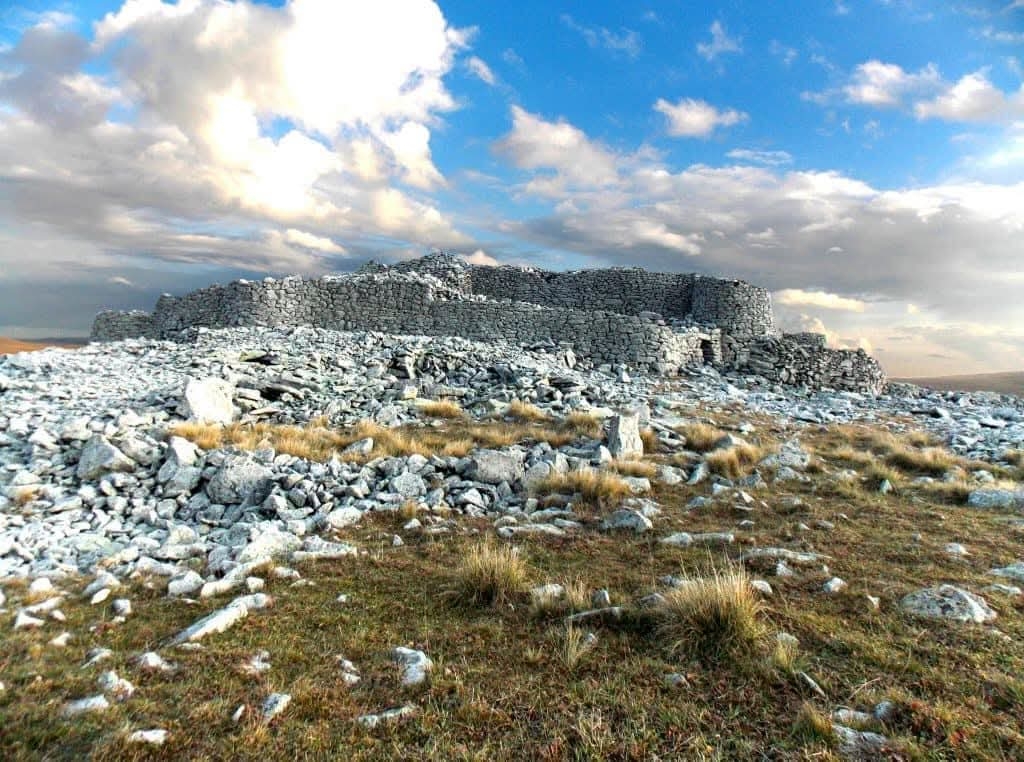
The photo shows the Cyclopean fortress of Abuli from
Samtskhe-Javakheti, dating from the Bronze Age. "Abul(l)u" (abullu)
is an Akkadian word meaning gate; this form is also found in the Assyrian
written tradition.
Georgia is a system of gateways, not just a transit country.
And it is worth knowing about.
In the future, TRACECA.GE will offer you a new, monthly
column - “Gatewayology”.
The Silk Road is a trace of historical trade. Today, its new
form connects people, economies, and markets digitally.
In this reality, gatewayology is not just a study of the past - it is a tool for understanding the future of Georgia’s trade diplomacy. Its development will further strengthen the credibility of Georgia’s trade diplomacy as a gateway country.
Etymological definition of the term
Pylonology is a proposed interdisciplinary field concerned with the study of gateways, thresholds, and structures of passage and mediation. Derived from the Ancient Greek pylōn (πυλών), “gateway” or “gate structure,” the concept of the pylon extends beyond the physical gateway to encompass material, spatial, geographical, institutional, political, technological, economic, cultural, and symbolic structures through which distinct domains are connected, separated, accessed, regulated, and transformed.
● კარიბჭეთმცოდნეობა (GEO)
● Pylonology (ENG),
● Դարպասաբանություն (ARM)
● Pylonologia (IT)
● Pylonoloji (TUR)
Summary/Definition
Pylonology — the science of connecting worlds separated from one another; a field of study encompassing spaces, routes, and economic, political, and cultural interactions.
Zurab Maghradze, DBA
Konstantin Vekua, Assoc. Prof.