News
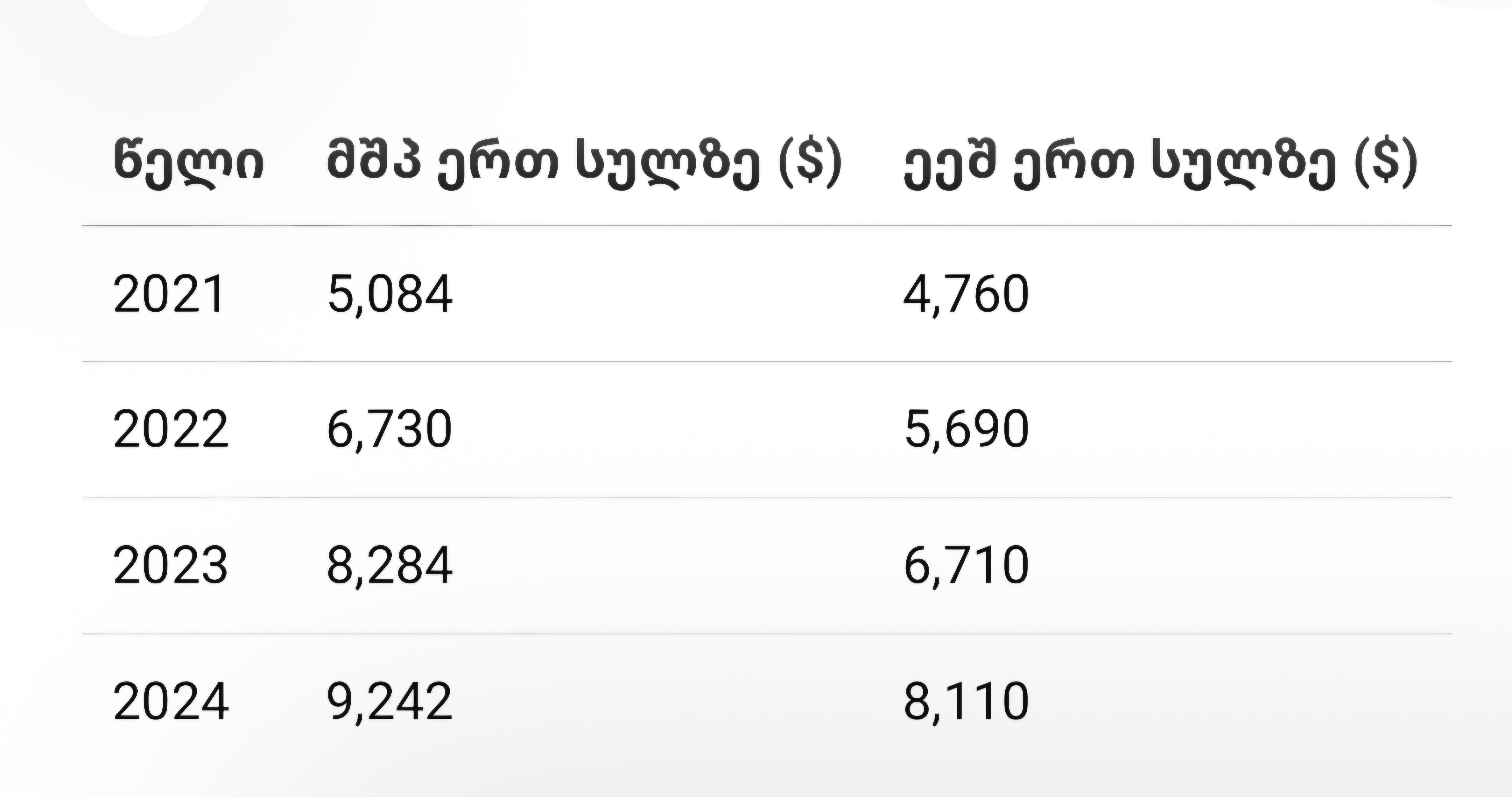
GDP and GNI per capita in Georgia
2026-07-28
GDP (Gross Domestic Product) and GNI (Gross
National Income) differ in what they measure.
● GDP – shows the value of all final goods and
services produced in a country during a year, regardless of who produces them
(local or foreign companies).
● GNI – shows the total income received by residents
of a country. It includes both income received within the country and net
primary income received from abroad (e.g., wages, dividends, interest), and
subtracts such income paid to foreigners or taken out of the country.
In short:
● GDP answers the question – how much was created in the
country?
● GNI answers the question – how much income was received by
residents of a country?
For example, if a foreign company operating in Georgia
transfers its profits abroad, this amount remains in GDP, but is deducted from
the GNP. Conversely, if a Georgian citizen receives income abroad, it is added
to the GNP, but is not included in GDP.
The attached table presents data on GDP and GNP in Georgia
by year, which shows that the national income per capita of a citizen lags
behind the value of wealth created per capita during the year. In other words,
no matter how much wealth (GNP) is created in the country, Georgian citizens do
not receive as much income.
For comparison, the 2024 data per capita in US dollars -
GDP/GNP:
● Denmark - 71,970 / 72,930
● Norway - 89,690 / 102,440
● Finland - 54,990 / 55,530
● Georgia - 9,242 / 8,110
In Denmark, Norway and Finland, the GDP figure exceeds the
GDP figure, while in Georgia, on the contrary, the GDP figure exceeds the
national income per capita.
When we talk about Georgia's transit potential and logistics
capabilities, we must clearly understand the main thing: the Silk Road for
Georgia means that Georgian citizens should also be rewarded with dividends
from the profits of companies. Which means a higher growth of the gross
national income, following the growth of GDP. The main guarantee of fulfilling
this condition is the introduction of a market economy in the country.
Explanation: In economics, the concept of a resident is not based on citizenship, but on permanent residence and place of economic activity. Therefore, GNI includes income received by residents of a country, regardless of whether they were received within the country or abroad.
Zurab Maghradze, DBA
Source:
● data.worldbank.org
● wdi.worldbank.org