News
Major Activity Is Underway in the Caspian Sea: Azerbaijan at the Center of Developments
2026-08-23
At first glance, the developments unfolding in Central
Asia this week appear to relate to disparate sectors; in reality, however, they
reflect a unified trend: the rapid growth of the region's geoeconomic
significance. Central Asia is no longer merely a region that exports raw
materials. Transport, energy, logistics, and trade projects undertaken by
Kazakhstan and Uzbekistan demonstrate that the region's nations are striving to
diversify their access routes to global markets and strengthen their transit
positions amidst the major powers. In this process, Azerbaijan and the
"Middle Corridor" are assuming particular importance.
The most prominent trend is Kazakhstan’s emergence as a key
transit hub in Eurasia. Of the $71.75 billion in total investment directed
toward Central Asia’s transport infrastructure, 45 percent—approximately $32.3
billion—is accounted for by Kazakhstan. The funds invested in railways,
highways, logistics centers, and border crossings are by no means coincidental.
Kazakhstan is seeking to turn its geographical location between China and
Europe into an economic advantage.
Azerbaijan’s role is particularly prominent in this context.
One of the main challenges for Central Asia in accessing global markets is
geographical distance and the limited availability of alternative transport
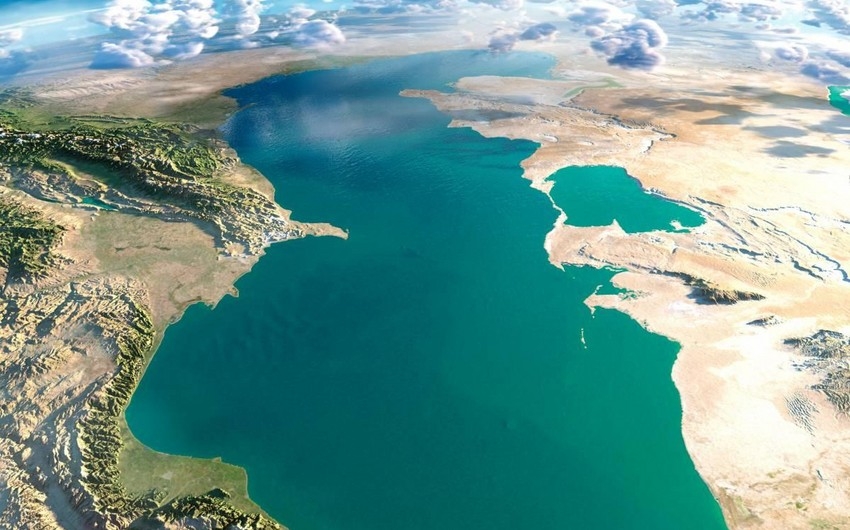
routes. The Caspian Sea serves as a natural transit link on the route leading
westward from Kazakhstan, with Azerbaijan situated on the opposite shore. In
this regard, the connection established between the Kazakh ports of Aktau and
Kuryk and the Azerbaijani port of Alat constitutes a key pillar of the Middle
Corridor.
The Middle Corridor connects China and Central Asia to
European markets via the Caspian Sea, Azerbaijan, Georgia, and Turkey, and is
gaining increasing strategic importance. The advantage of this route is that it
enables Central Asian countries to export their products to global markets not
only through the traditional northern routes crossing Russian territory but
also via alternative directions. The Middle Corridor, passing through
Azerbaijan, offers the possibility of delivering cargo to its destination faster
and at a lower cost than the two other alternative East-West routes.
Furthermore, unlike the other two alternatives, the Middle Corridor bypasses
Russia and Iran—countries viewed unfavorably by the US and Europe.
This is particularly significant in the current geopolitical
climate. The Russia-Ukraine war and growing threats to energy and transport
infrastructure in the Black Sea region are heightening interest in alternative
corridors. Under these circumstances, the route through Azerbaijan is not
merely a commercial project but also a strategic transport alternative for
Central Asia.
Recent shifts in Kazakhstan's oil exports illustrate this
point. Russia's plans to redirect Kazakh oil from Ust-Luga to Novorossiysk
serve as a further reminder that states relying on the infrastructure of other
countries for oil exports face risks associated with their transit routes. In
this context, expanding opportunities for access to Europe—via the Caspian Sea
to Azerbaijan, and subsequently through Georgia and Turkey—is a matter of both
economic and strategic importance for Kazakhstan.
For Azerbaijan, this process holds dual significance. On one
hand, the country can strengthen its transit role in supplying Central Asian
energy resources to Europe; on the other, the growth of freight traffic along
the Middle Corridor could further solidify Azerbaijan’s position as a logistics
and transport hub. The Port of Alat, the Baku-Tbilisi-Kars railway, and
other logistics infrastructure established within Azerbaijan serve as integral
components of this unified chain.
Uzbekistan’s plans to secure access to the Georgian ports of
Poti and Anaklia demonstrate that this process extends beyond Kazakhstan alone.
Indeed, seeking to overcome the constraints associated with its status as a
landlocked Central Asian nation, Tashkent is striving to expand its logistics
capabilities toward the Caspian region and the South Caucasus. The
establishment of a logistics center with a capacity of 500,000 tons at the Port
of Poti could facilitate the export of Uzbek products to European markets via
the Black Sea.
Thus, the Middle Corridor is not merely a China-Europe
route. In the long term, it could evolve into a multifaceted regional logistics
system connecting products from Kazakhstan, Uzbekistan, Turkmenistan, and other
Central Asian nations—via Azerbaijan—to markets in Turkey and Europe. In this
context, Azerbaijan could emerge not just as a transit country within the
Middle Corridor, but as a logistics hub linking various routes.
This process also creates new opportunities for Azerbaijan’s
energy transit sector. Transporting Kazakh oil—and potentially other Central
Asian energy resources in the future—across the Caspian Sea to Azerbaijan could
further strengthen the country's role in European energy security. At the same
time, complementary links could emerge between the supply of Azerbaijani gas to
Europe via the Southern Gas Corridor and the westward transport of Central
Asian energy resources.
Migration trends also reflect the economic changes underway
in the region. The initiative in Russia to tax migrant remittances sent abroad
at a rate of 3 percent demonstrates that the dependence of Central Asian labor
migrants on the Russian economy has become a politically sensitive issue.
The expansion of visa-free transit arrangements between
Kyrgyzstan and China is also part of Beijing's policy to deepen economic and
humanitarian ties with the region. For China, Central Asia is no longer merely
a source of energy and raw materials; it is also a vital component of the
transport route leading to Europe.
Ultimately, the developments unfolding in Central Asia are
not simply isolated economic updates from individual nations, but rather
elements of a broader geoeconomic transformation.
Azerbaijan’s significance in this process is steadily
growing. For Central Asian countries, the key challenge lies not only in
production but also in delivering goods to global markets safely, rapidly, and
competitively. Azerbaijan serves as a crucial link, connecting the Caspian Sea
to the South Caucasus and Turkey to Central Asia. Consequently, the development
of the Middle Corridor holds far greater importance for Azerbaijan than mere
transit revenue; it has the potential to define the country's strategic role in
the process of integrating Central Asia into the global economy. Consequently,
Kazakhstan’s efforts to boost its transit potential, Uzbekistan’s pursuit of
access to Caucasus ports, the expansion of ties between China and Central Asia,
and Europe’s growing interest in alternative energy and logistics routes are
creating new opportunities for Azerbaijan. The key question, however, is the
extent to which these opportunities can be successfully transformed into actual
cargo flows, energy transit, and long-term investments. The future success of
the Middle Corridor will depend precisely on how effectively this unified
economic chain is established among Azerbaijan, Central Asia, Turkey, and
Europe.
Akif Nasirli
globalinfo.az