pylonology
35 Years in the Name of a Market Economy — Where Is the Free Market
2026-11-18
Declaring a free market and establishing free-market institutions are not one and the same.
For 35 years, successive governments in Georgia have spoken about a market economy. Yet the country still lacks, or has poorly functioning versions of, the following:
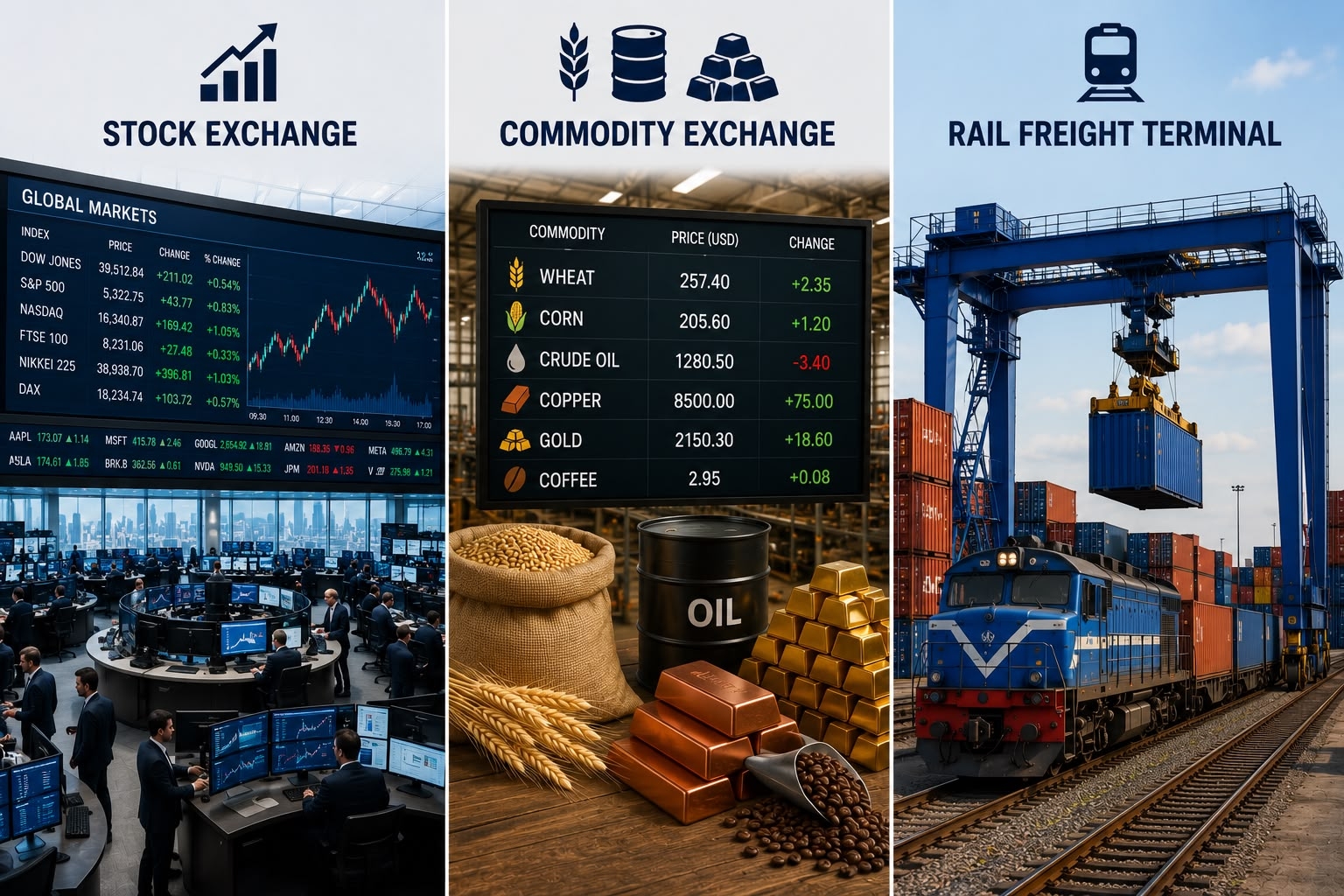
• A commodity exchange where farmers can sell their produce at transparent prices;
• A developed foreign exchange market;
• A liquid stock market;
• Independent and effective securities market supervision;
• Mechanisms for attracting long-term capital.
As a result, one question is entirely legitimate: What kind of market economy have we actually built?
One distinction is particularly important here: market liberalization does not mean the development of market institutions. A state can reduce its role in the economy while simultaneously failing to establish the infrastructure necessary for a competitive market.
Historical Facts and Arguments
1. The Leszek Balcerowicz Story
President Eduard Shevardnadze invited Balcerowicz to serve as an economic adviser in 2000. He was also accompanied by a team of Polish experts as part of a programme funded by the US government.
By August 2001, reports were already emerging that the Georgian government had failed to create the necessary conditions for implementing his recommendations, rendering his work ineffective.
2. Abolition of the Securities Commission
• In 1998, an independent securities regulatory commission was established.
• In July 2007, its functions were transferred to the National Bank of Georgia.
• As a result, the independent regulatory body was abolished.
This institutional change is documented in the 2015 Diagnostic Study of Georgia's Capital Market.
It was a significant political and economic decision. However, when assessing its consequences, it is important to bear in mind that abolishing an independent regulator does not automatically mean abolishing the securities market itself.
3. The Actual State of the Stock Exchange
Data published by the Georgian Stock Exchange for 2025 clearly demonstrate that organized stock trading in the country is virtually inactive. Throughout the year, only nine transactions were executed during the exchange's trading sessions, with a combined value of GEL 26,905. Meanwhile, the volume of transactions registered outside the exchange reached GEL 173.7 million.
This stark disparity indicates that the vast majority of transactions in the securities market take place outside organized exchange trading. Consequently, although the Georgian Stock Exchange formally exists and has 17 listed issuers, it is practically unable to fulfil one of the capital market's fundamental functions: ensuring liquid, transparent and competitive trading in securities.
As a result, Georgia's stock exchange is more of a formally existing institution than a genuinely functioning capital market. This raises serious questions about the level of institutional development of the country's market economy.
4. The Foreign Exchange Market
Georgia has a foreign exchange market, but it is not a traditional public exchange. According to the National Bank of Georgia, interbank foreign exchange trading takes place on Bloomberg's Bmatch platform.
5. The Commodity Exchange
As early as 1996, Georgia already had an international commodity exchange and five local wholesale exchanges for agricultural products.
In 2009, plans to establish a new international commodity exchange were also announced, with operations expected to begin in 2010.
This demonstrates that the problem is not simply a matter of establishing an exchange by law. What is needed is actual trading volume, standardization, warehousing facilities, quality control and trust.
What Does Europe Require?
The European Commission's 2026 report on Georgia explicitly states that the country needs to develop the non-banking segments of its financial sector, including the capital market and insurance sector. It also highlights delays in aligning securities market legislation with European standards.
In other words, capital market development is indeed part of the agenda for European economic integration.
Conclusion
In Georgia, the liberalization of the market economy has progressed faster than the development of market economy institutions.
As a result, we have ended up with an economy in which:
• Banks have become the primary institutions of financial intermediation;
• The capital market remains underdeveloped;
• Farmers lack a fully functioning commodity exchange;
• Small and medium-sized businesses have limited alternatives for raising capital;
• The culture of investing savings in the stock market remains weak.
An interesting question: Why has Georgia failed to establish the kind of market infrastructure that emerged in Poland as a result of Balcerowicz's reforms?
Zurab Maghradze, DBA
Sources:
civil.ge / wbj.pl / economy.ge / matsne.gov.ge
nbg.gov.ge / nbg.gov.ge / elibrary.imf.org
geoeconomics.ge / publications.europa.eu