silk-road
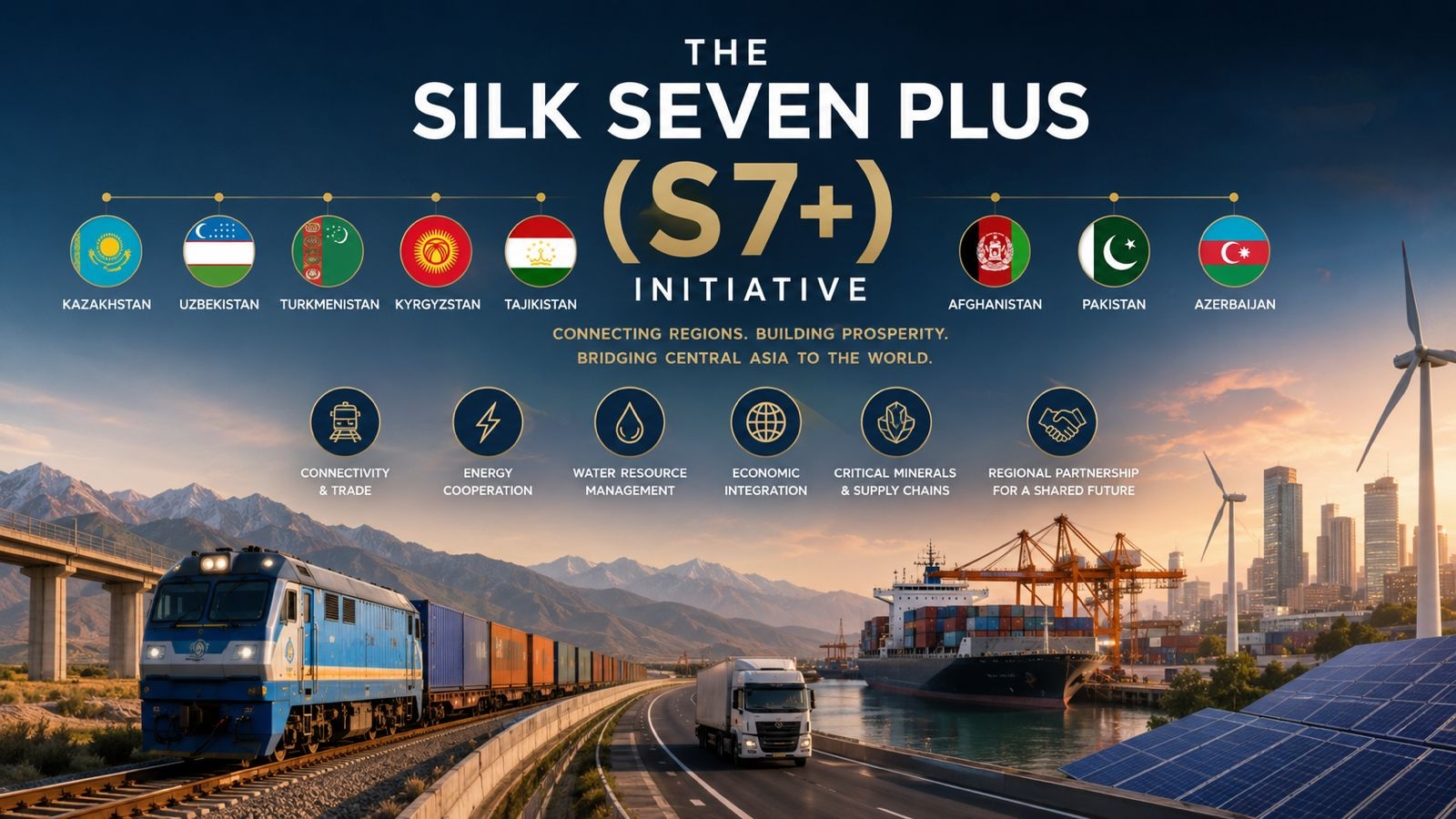
The Silk Seven Plus Initiative
2026-05-30
The seminar held on April 20, 2026 at the Rayburn House
Congressional Office Building on Capitol Hill in Washington, D.C., where the
New Lines Institute presented the new Silk Seven Plus (S7+) initiative, clearly
demonstrated: a new architecture is being created in global politics, and
Georgia's role in this process is irreplaceable.
What is S7+ and why Washington?
The New Lines Institute initiative of the American think
tank aims to form a single economic bloc (on the ASEAN model) of 5 Central
Asian countries (Kazakhstan, Tajikistan, Uzbekistan, Turkmenistan, Kyrgyzstan),
Azerbaijan, Pakistan, and Afghanistan. The goal is simple: for the region to
speak with one voice, to avoid Russian-Chinese dominance, and to open new trade
corridors.
How does this relate to Georgia’s European integration
strategy?
The trends outlined at the Washington seminar directly
strengthen Georgia’s positions in relations with the EU in three key areas:
1. The unalternative Western Gateway to the “Middle
Corridor”:
The US-backed S7+ plan envisages redirecting the flow of
cargo and critical minerals to the West. Since Azerbaijan is an official member
of this project, the Trans-Caspian route cannot be physically completed without
Georgian ports (Poti, Anaklia) and railway infrastructure. We are becoming a
bridge connecting the giant Asian bloc with the EU single market.
2. Guarantee of EU energy and logistical security:
For Brussels, Georgia is no longer just an associated
partner – in the S7+ context, we become a guarantor of the EU’s strategic
autonomy. The more Europe needs alternative resources bypassing Russia, the
more Georgia’s value as a safe hub in the eyes of the West increases.
3. Geopolitical advantage in relation to the OTS
(Organization of Turkic States):
As noted in Washington, the OTS is limited by ethnic
identity. S7+ is a purely economic and geographical project. Georgia, which is
not part of the Turkic world, not only does not lose its function in this
model, but also acquires a unique role – to be the main conduit of this
multinational Asian coalition to Europe.
Conclusion:
Georgia’s integration into the EU is not only about domestic reforms; This is the right positioning in global geopolitical projects. The American S7+ initiative gives us a historic chance to prove that Georgia's European future is not a "burden" of the West, but a crucial strategic asset on the Eurasian continent.
Dato Gochava
Source: newlinesinstitute.org; caspianpolicy.org